





Definition and Purpose of New York Form IT-203
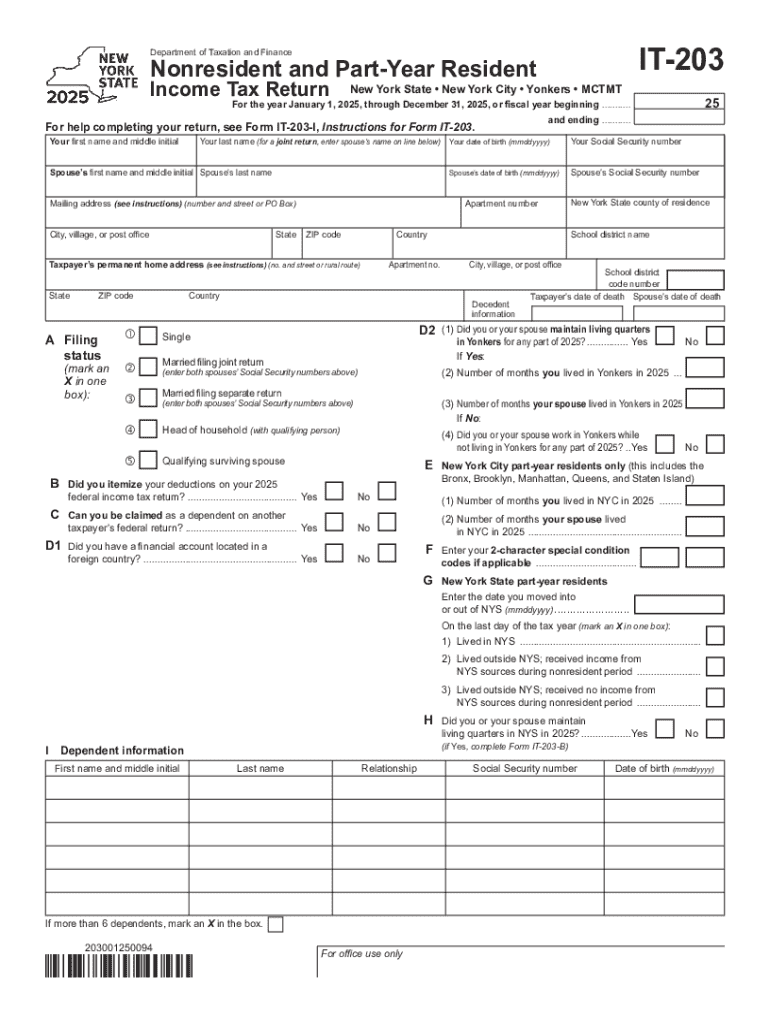
Form IT-203 is the New York State Department of Taxation and Finance's designated nonresident and part-year resident income tax return form. This document is mandatory for individuals who do not reside in New York but earn an income from New York sources. The primary function of this form is to determine the appropriate amount of state taxes owed based on income generated within New York. It includes sections for reporting wages, business income, rental income, and any other earnings specific to the state.
Eligibility Criteria
To determine whether you should file Form IT-203, consider the following criteria:
- Nonresidents who earn income from New York sources such as salaries, wages, rental properties, or business operations.
- Part-year residents who lived in New York for a portion of the tax year and earned income during that period.
- Individuals with income from partnerships or S corporations located in New York. Noncompliance may lead to penalties, so it is crucial to evaluate eligibility based on personal financial circumstances.


Steps to Complete New York Form IT-203 for a Nonresident
Completing Form IT-203 involves several detailed steps to ensure accuracy and compliance. The following outlines the process:
- Gather Necessary Documents: Start by collecting all required documents, such as W-2s, 1099s, K-1s, and records of any income derived from New York sources.
- Calculate New York Income: Determine the total income earned within New York by considering wages and other earnings like rental income or capital gains from New York activities.
- Fill Out Personal Information: Provide your full name, address, Social Security number, and filing status on the form's upper section.
- Report Federal Adjusted Gross Income: Enter federal AGI from your federal tax return in the designated section on Form IT-203.
- Complete New York Adjustments: Adjust your federal AGI by adding or subtracting income specific to New York regulations, such as guaranteed payments or certain pensions.
- Calculate Taxable Income: Subtract any deductions and exemptions specific to New York to find your taxable income amount.
- Determine New York Tax Liability: Use state tax tables to calculate your New York State tax liability, considering any credits or additional taxes applicable.
- Sign and Date: Verify all information, then sign and date the form to validate your submission.
Common Mistakes to Avoid
- Incorrectly reporting income amounts, particularly from mixed sources.
- Misapplying credits leading to inaccurate tax liability figures.
Important Terms Related to New York Form IT-203
Understanding essential terminology is vital when dealing with Form IT-203:
- Nonresident: An individual who does not reside in New York but earns income there.
- Part-Year Resident: Someone who lived in New York for only part of the year in question.
- Federal Adjusted Gross Income (AGI): The total gross income reported on your federal tax return after adjustments.
Relevance of These Terms
These terms ensure accurate completion of the form, as different rules may apply for nonresidents and part-year residents regarding the income reported and tax liabilities calculated.
Examples of Using New York Form IT-203 in Various Scenarios
Form IT-203 is applicable in numerous situations. Here are several practical examples:
- A freelance graphic designer living in New Jersey earns income from clients in New York and must file Form IT-203 to report this income.
- An Illinois resident owns a rental property in Brooklyn, necessitating the use of Form IT-203 to declare rental income.
- A part-year resident moved out of New York to another state mid-year and must file the form to report income earned while living in New York.
Case Studies Illustration
Consider the scenario of an IT consultant living in California who provides services to a New York-based company. They would file Form IT-203 to disclose this New York-source income and ascertain the correct tax obligations.
Legal Use and Compliance of Form IT-203
New York State ensures compliance by requiring nonresidents and part-year residents with New York-source income to file Form IT-203. The legal framework mandates accurate reporting to prevent underpayment or evasion of taxes owed. Understanding the implications of underreporting or neglecting to file is crucial, as penalties can involve fines or additional fees.
Penalties for Non-Compliance
Failure to file or incorrectly filing Form IT-203 can result in several penalties, such as late fees, interest on unpaid taxes, and additional charges for discrepancies discovered during audits.
Key Elements of Form IT-203
- Identification: Clearly identifying the filer with personal information and filing status.
- Income Reporting: Detailed breakdown of various income categories pertinent to New York sources.
- Credits and Deductions: Specific sections for tax credits available to nonresidents, such as the resident credit, which offsets taxes paid to other jurisdictions.
Comprehensive Understanding of Key Elements
Mastering these key elements is vital to achieving an accurate and compliant tax filing. Each section of the form plays a critical role in determining overall tax obligations.
Filing Deadlines and Important Dates
Form IT-203 is due by April 15 of the year following the tax year being reported. If April 15 falls on a weekend or public holiday, the deadline extends to the next business day.
Extensions and Exceptions
Taxpayers can request an automatic extension by filing Form IT-370, allowing additional time, typically extending to October 15. However, interest will accrue on any taxes not paid by the original due date.
Digital vs. Paper Versions: Filing Options
Form IT-203 can be submitted either digitally through approved software or as a paper form mailed to the New York State Department of Taxation and Finance. Digital filing offers the advantage of faster processing and instant confirmation of receipt.
Benefits of Digital Filing
- Efficiency: Reduced processing time compared to paper submissions.
- Convenience: Ability to file from any location with internet connectivity.
- Error Reduction: Built-in software checks to minimize calculation or reporting errors.
Understanding these options and strategic filing choices is essential for optimizing your tax reporting process.